

As a supplier of J1900 Thin Itx, I often encounter inquiries about the suitability of this product for web browsing. In this blog post, I will delve into the technical specifications of the J1900 Thin Itx and analyze its performance in web - browsing scenarios.
Technical Specifications of J1900 Thin Itx
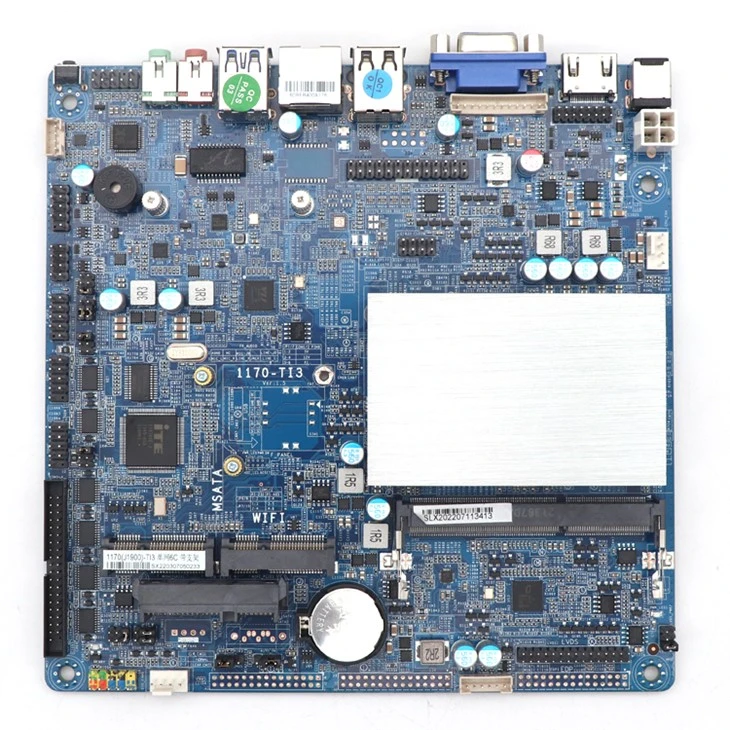
The J1900 Thin Itx is based on the Intel Celeron J1900 quad - core processor. This processor operates at a base frequency of 2.0 GHz and can burst up to 2.42 GHz. It has a relatively low thermal design power (TDP) of 10 watts, which makes it energy - efficient and suitable for thin and compact form factors.
The integrated graphics in the J1900 is the Intel HD Graphics, which provides basic graphical processing capabilities. It supports resolutions up to 2560x1600, which is sufficient for most web - browsing needs. The motherboard of the J1900 Thin Itx usually comes with support for up to 8GB of DDR3L memory, which can be a limiting factor in some scenarios but is generally adequate for simple web - browsing tasks.

Web - Browsing Requirements
Before evaluating whether the J1900 Thin Itx can handle web browsing, it's important to understand the requirements of modern web browsing. Today's web pages are often filled with rich media content such as high - resolution images, videos, and interactive elements. These elements require both processing power and memory to load and display smoothly.
In addition, many web applications, such as online office suites and streaming services, demand a certain level of performance from the device. For example, video streaming platforms like YouTube and Netflix require a stable connection and sufficient processing power to decode and play videos in high - definition.
Performance in Web Browsing
Basic Web Browsing
For basic web browsing, such as visiting news websites, reading blogs, and checking emails, the J1900 Thin Itx performs reasonably well. The quad - core processor can handle the multi - threading tasks involved in loading multiple web pages simultaneously. The integrated graphics can display static images and simple animations without any significant lag.
However, it's important to note that the performance may be affected by the amount of open tabs. Opening too many tabs at once can quickly consume the available memory, leading to slower page loading times and potential freezes.
Multimedia - Rich Web Pages
When it comes to multimedia - rich web pages, the J1900 Thin Itx may face some challenges. High - resolution images and videos can put a strain on the integrated graphics and the processor. For example, when trying to stream a 1080p video on YouTube, the device may experience buffering or pixelation, especially if the network connection is not stable.
The limited memory capacity can also be a bottleneck in these scenarios. As more multimedia content is loaded, the memory usage increases, and the system may start swapping data to the hard drive, which significantly slows down the performance.
Web Applications
Web applications, such as Google Docs or Microsoft Office Online, require a certain level of processing power and memory to function smoothly. The J1900 Thin Itx can handle basic tasks in these applications, such as creating and editing simple documents. However, more complex operations, such as working with large spreadsheets or collaborating in real - time on a document with multiple users, may be sluggish.
Comparison with Other Thin Itx Options
There are other Thin Itx options available in the market, such as the 11th 12th Thin Itx. These newer models are based on more advanced processors and offer better performance in terms of processing power, graphics capabilities, and memory support.
Compared to the J1900 Thin Itx, the 11th 12th Thin Itx can handle more demanding web - browsing tasks, such as streaming 4K videos and running resource - intensive web applications. However, they also come at a higher cost.
Upgrading the J1900 Thin Itx for Better Web - Browsing Performance
If you already have a J1900 Thin Itx and want to improve its web - browsing performance, there are a few upgrades you can consider. One option is to increase the memory. Upgrading from 4GB to 8GB of DDR3L memory can significantly improve the system's responsiveness, especially when dealing with multiple open tabs or multimedia - rich web pages.
Another option is to replace the hard drive with a solid - state drive (SSD). An SSD offers much faster read and write speeds compared to a traditional hard drive, which can reduce page loading times and improve overall system performance.
Conclusion
In conclusion, the J1900 Thin Itx can be used for web browsing, especially for basic tasks. It offers a cost - effective solution for users who only need to perform simple web - related activities. However, for more demanding tasks such as streaming high - definition videos or running complex web applications, its performance may be limited.
If you are in the market for a Thin Itx device for web browsing, you need to consider your specific requirements. If you only need a device for light web use, the J1900 Thin Itx can be a good choice. On the other hand, if you require more performance, you may want to explore other options such as the 11th 12th Thin Itx.
If you are interested in purchasing the J1900 Thin Itx or have any questions about our products, we welcome you to contact us for further discussion. We are committed to providing high - quality products and excellent customer service.
References
- Intel Corporation. (n.d.). Intel Celeron J1900 Processor Specifications. Retrieved from Intel official website.
- Various web - browsing performance benchmarks from technology review websites.