

As a supplier of J1900 Thin Itx, I've received numerous inquiries about whether the J1900 Thin Itx has a fan. This is a crucial question for many potential buyers, as the presence or absence of a fan can significantly impact the device's performance, noise level, and overall reliability. In this blog post, I'll delve into this topic in detail, providing you with all the information you need to make an informed decision.

Understanding the J1900 Thin Itx
Before we discuss the fan situation, let's first understand what the J1900 Thin Itx is. The J1900 is an Intel Celeron quad - core processor that offers a balance between performance and power consumption. It's commonly used in thin and compact ITX (Information Technology Extended) form - factor motherboards, which are designed for small - footprint computers. These systems are ideal for applications such as media centers, home servers, and industrial control systems where space is limited.
The J1900 Thin Itx is known for its low - power operation, which is one of the reasons why many users are attracted to it. Its thin and compact design makes it suitable for integration into various devices without taking up too much space.
The Fan Situation
The answer to the question “Does J1900 Thin Itx have a fan?” is not a straightforward yes or no. It depends on the specific design of the motherboard and the intended use of the system.
Fan - Based Designs
Some J1900 Thin Itx motherboards come with a fan. The main reason for including a fan is to enhance the cooling efficiency of the processor. The J1900 processor, although low - power, still generates heat during operation. In applications where the system is expected to run continuously or perform resource - intensive tasks, a fan can help dissipate the heat more effectively.
For example, if you plan to use the J1900 Thin Itx as a home server that needs to handle multiple concurrent connections and data transfers, a fan - cooled system may be more suitable. The fan can prevent the processor from overheating, which could lead to performance degradation or even system failure.
However, fan - based designs also have some drawbacks. The most obvious one is the noise generated by the fan. Even the quietest fans produce some level of noise, which can be a nuisance in a quiet environment such as a home theater. Additionally, fans have moving parts, which means they are more prone to mechanical failure over time.
Fanless Designs
On the other hand, there are also fanless J1900 Thin Itx motherboards available. These designs rely on passive cooling methods, such as heat sinks and heat pipes, to dissipate the heat generated by the processor.
Fanless designs are highly valued for their silent operation. They are perfect for use in media centers or any environment where noise is a concern. Since there are no moving parts, they also tend to be more reliable and require less maintenance.
However, fanless designs have limitations in terms of cooling capacity. They are generally more suitable for light - duty applications where the processor doesn't need to work at full capacity for extended periods. If you try to run resource - intensive tasks on a fanless J1900 Thin Itx system, the processor may throttle to prevent overheating, resulting in reduced performance.
Factors to Consider When Choosing
When deciding whether to choose a J1900 Thin Itx with a fan or a fanless design, you need to consider several factors:
Usage Scenario
As mentioned earlier, the intended use of the system is a crucial factor. If you plan to use the system for light tasks such as web browsing, media playback, or basic office work, a fanless design may be sufficient. However, if you need to run more demanding applications such as virtual machines or data - intensive programs, a fan - cooled system would be a better choice.
Noise Tolerance
Your tolerance for noise is another important consideration. If you value a quiet environment, a fanless J1900 Thin Itx would be ideal. But if you can tolerate a certain level of noise in exchange for better performance, a fan - based design may be more appropriate.
Budget
In general, fanless motherboards tend to be more expensive than their fan - based counterparts. This is because the passive cooling solutions used in fanless designs often require more advanced technology and better - quality materials. If budget is a constraint, you may need to weigh the cost against the benefits of a fanless design.
Our Product Offerings
As a supplier, we offer a wide range of J1900 Thin Itx motherboards, including both fan - based and fanless options. We also provide Mainboard Thin Itx solutions with different specifications to meet the diverse needs of our customers.
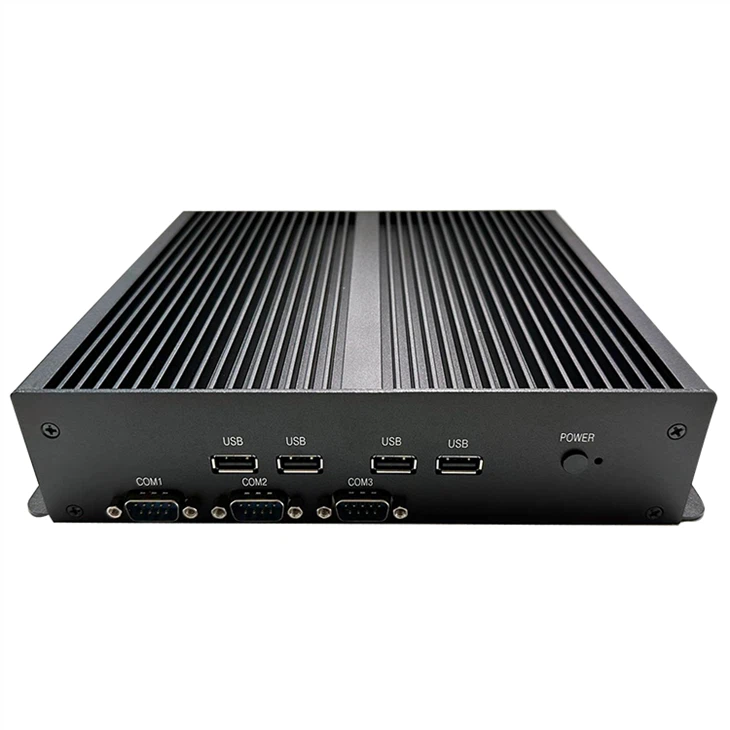
In addition to the J1900 series, we also have 11th 12th Thin Itx products, which offer higher performance for more demanding applications. Whether you are looking for a silent media center solution or a high - performance industrial computer, we have the right product for you.
Conclusion
In conclusion, the J1900 Thin Itx may or may not have a fan, depending on the specific design. Both fan - based and fanless designs have their own advantages and disadvantages, and the choice between them depends on your specific requirements.
If you have any questions about our J1900 Thin Itx products or need further advice on choosing the right solution for your needs, please don't hesitate to contact us. We are here to help you make the best decision and provide you with high - quality products and excellent service. Feel free to reach out to us for procurement discussions and let's work together to find the perfect ITX solution for your project.
References
- Intel official documentation on the J1900 processor
- Industry reports on thin ITX motherboard technology and trends