

As a supplier of J1900 Thin Itx, I am often asked about the maximum data transfer rate of the storage interface on this device. In this blog post, I will delve into the technical details to provide a comprehensive answer.
Understanding the J1900 Thin Itx
Before we discuss the data transfer rate, let's briefly introduce the J1900 Thin Itx. The J1900 Thin Itx is a compact and efficient motherboard solution that offers a balance between performance and power consumption. It is widely used in various applications such as industrial control, digital signage, and home media centers.
Storage Interfaces on J1900 Thin Itx
The J1900 Thin Itx typically comes with several storage interfaces, including SATA (Serial ATA) and mSATA (mini - Serial ATA). Each interface has its own characteristics and data transfer capabilities.
SATA Interface
The SATA interface is one of the most common storage interfaces in modern computing. On the J1900 Thin Itx, the SATA interface usually supports SATA III (6 Gbps) standard. The SATA III specification provides a theoretical maximum data transfer rate of 6 gigabits per second (Gbps). However, in real - world scenarios, the actual data transfer rate is often lower due to various factors.
One of the main factors affecting the actual data transfer rate is the performance of the storage device itself. For example, if you are using a traditional hard disk drive (HDD), the rotational speed and internal data transfer rate of the HDD will limit the overall data transfer speed. A typical 7200 RPM HDD may have an internal data transfer rate of around 100 - 200 megabytes per second (MB/s).
On the other hand, if you use a solid - state drive (SSD), the data transfer rate can be much higher. Modern SSDs can achieve sequential read and write speeds close to the theoretical limit of the SATA III interface. For instance, some high - end SSDs can reach sequential read speeds of over 500 MB/s and sequential write speeds of around 400 MB/s.
mSATA Interface
The mSATA interface is a smaller form - factor version of the SATA interface, which is commonly used in laptops and small form - factor devices like the J1900 Thin Itx. Similar to the SATA interface, the mSATA interface on the J1900 Thin Itx also typically supports the SATA III standard, offering a theoretical maximum data transfer rate of 6 Gbps.
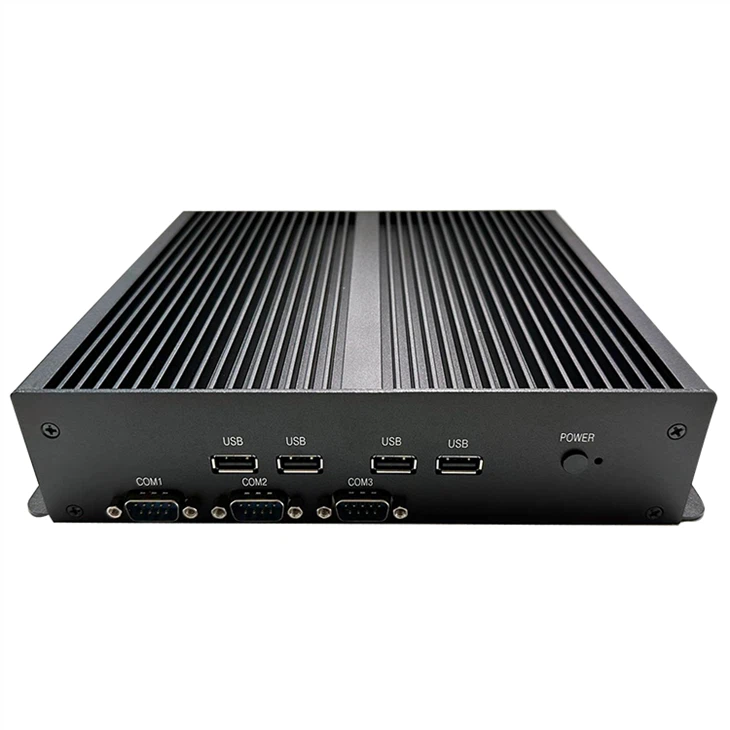

The performance of mSATA SSDs can vary widely depending on the quality and specifications of the drive. Some entry - level mSATA SSDs may have sequential read and write speeds in the range of 200 - 300 MB/s, while high - performance mSATA SSDs can achieve speeds comparable to larger 2.5 - inch SATA SSDs.
Factors Affecting Data Transfer Rate
In addition to the storage device itself, there are several other factors that can affect the data transfer rate on the J1900 Thin Itx.
System Load
If the system is under heavy load, such as running multiple applications simultaneously or performing intensive tasks like video encoding, the available bandwidth for data transfer may be reduced. The CPU, memory, and other system resources may be occupied, causing delays in data transfer operations.
Interface Contention
When multiple storage devices are connected to the same interface or when there are other high - bandwidth devices competing for the same interface, interface contention can occur. This can lead to a decrease in the data transfer rate of the storage devices.
Cable and Connector Quality
The quality of the SATA or mSATA cables and connectors can also have an impact on data transfer. Poor - quality cables may introduce signal interference or attenuation, resulting in reduced data transfer speeds or even data errors.
Comparing with Other Thin Itx Boards
It is also interesting to compare the data transfer rate of the J1900 Thin Itx with other Thin Itx boards, such as the 11th 12th Thin Itx. Newer generation Thin Itx boards may support more advanced storage interfaces, such as NVMe (Non - Volatile Memory Express).
NVMe is a high - performance storage protocol designed specifically for SSDs. It offers significantly higher data transfer rates compared to SATA. NVMe SSDs can achieve sequential read speeds of over 3000 MB/s and sequential write speeds of over 2000 MB/s. In contrast, the SATA - based storage interfaces on the J1900 Thin Itx have a much lower theoretical limit.
However, the J1900 Thin Itx still has its advantages. It is more cost - effective and suitable for applications that do not require extremely high - speed data transfer. For example, in a simple digital signage system or a home media center, the SATA - based storage on the J1900 Thin Itx can provide sufficient performance at a lower cost.
Mainboard Considerations
When evaluating the data transfer rate of the storage interface on the J1900 Thin Itx, it is also important to consider the overall design of the Mainboard Thin Itx. The layout of the traces on the mainboard, the quality of the voltage regulators, and the thermal design can all affect the stability and performance of the storage interface.
A well - designed mainboard will minimize signal interference and ensure proper power delivery to the storage devices, which can help to achieve the maximum data transfer rate. On the other hand, a poorly designed mainboard may introduce noise and instability, leading to sub - optimal performance.
Conclusion
In conclusion, the theoretical maximum data transfer rate of the storage interface on the J1900 Thin Itx is 6 Gbps for both SATA and mSATA interfaces, thanks to the support of the SATA III standard. However, in real - world applications, the actual data transfer rate is influenced by various factors, including the performance of the storage device, system load, interface contention, and cable quality.
If you are looking for a cost - effective solution with sufficient storage performance for general applications, the J1900 Thin Itx is a great choice. But if you require extremely high - speed data transfer, you may want to consider newer generation Thin Itx boards with NVMe support.
If you are interested in purchasing J1900 Thin Itx or have any questions about its storage interface performance, please feel free to contact us for a detailed discussion. We are always ready to assist you in finding the best solution for your specific needs.
References
- SATA III Specification Documentation
- mSATA Technical Guides
- SSD Manufacturer's Product Specifications